
Teaching Beyond the Textbook: Reimagining the Classroom for the Future
Updated: Sep 11

I stumbled into teaching life skills to tertiary students after leaving a career in publishing almost a decade ago. Guided mostly by intuition and plenty of trial and error, I created my own curriculum to address topics I felt were critical for the workforce yet underserved by conventional systems.
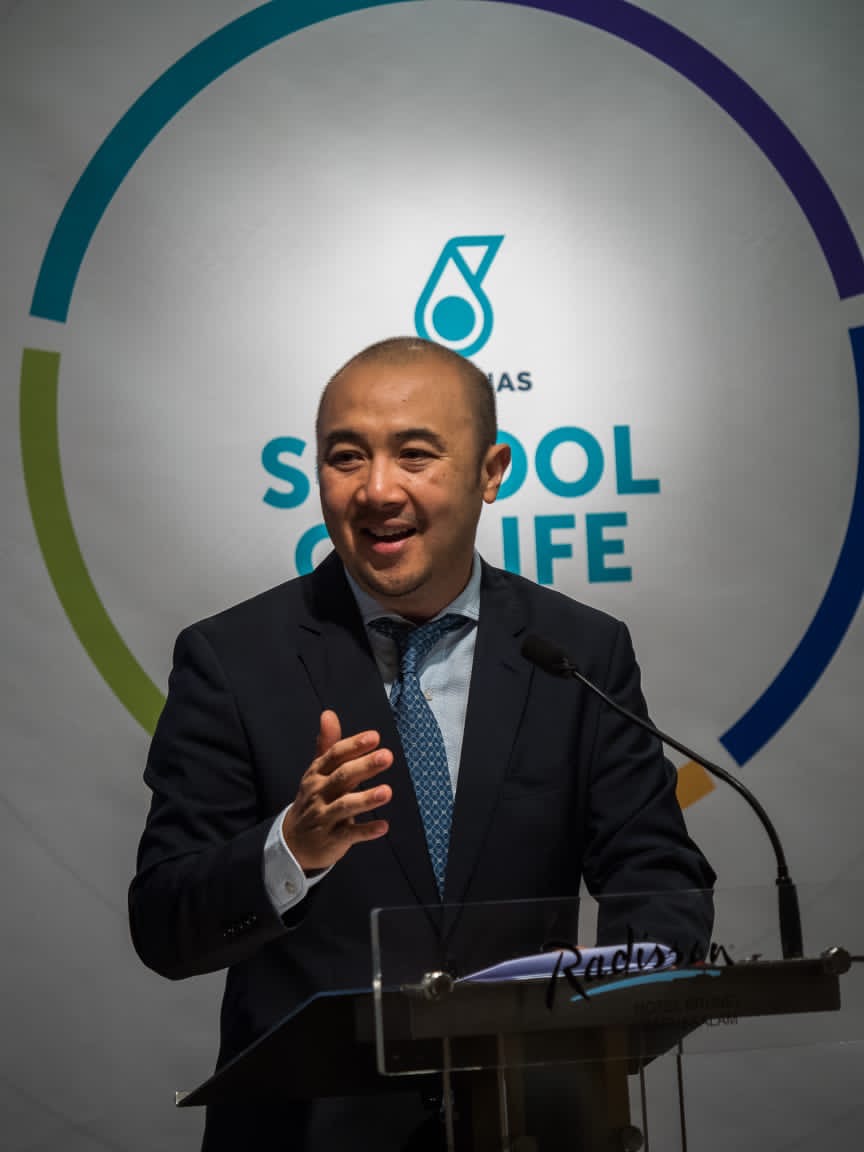
My first program, School of Life, covered communication, confidence building, growth mindset and resilience. Over time, it evolved into the Future Leaders Academy, with a renewed focus on preparing young people to lead in an uncertain future.
I approached program design through reverse engineering, asking three fundamental questions:
What specific skills will future employers actually require?
How can I design a class that a once-disinterested student like myself would actually want to attend?
How do we prepare students not just to be smart and competent, but to hold good values and do good for society?
Through continuous iteration and direct student feedback, the program grew into a highly sought-after elective. Eight years later, I have taught over 3,000 students—from high schools to tertiary institutions across Brunei and beyond.
Along the way, I’ve gained invaluable insights into what makes a classroom tick—and what turns students off. Today, I want to share a few of these lessons to help foster a more engaging, conducive learning environment, especially for the borderline students who remind me of my younger self.
The Modern Classroom Context
Let’s begin by acknowledging reality: a teacher’s job has never been more challenging. Educators today face a generation of students whose attention spans have been fractured by algorithms designed to capture their every spare second. With the rise of AI, students have instant access to information that rivals the best teachers out there. Furthermore, growing up in highly protected environments with zero-friction convenience—where entertainment, food, and information arrive at the swipe of a button—patience has become a rare virtue.
It used to be that teachers could confidently promise that hard work guaranteed a secure future. Today, that guarantee no longer holds—even for the educators themselves.
How, then, do we engage and guide a classroom under such conditions of rapid change and uncertainty?
1. Learning to Learn
The late futurist Alvin Toffler made a bold prediction: "The illiterate of the 21st century will not be those who cannot read and write, but those who cannot learn, unlearn, and relearn." If that holds true, shouldn’t our greatest responsibility as educators be to teach students how to learn for themselves?
To achieve this, we must rethink the fundamental role of the educator. In an age of boundless information, the teacher can no longer serve merely as the primary source of knowledge.
For our program, I flipped around by assigning students to prepare materials before we cover a topic. Students were tasked to research and present on key concepts, with me pointing them toward movie clips, cutting-edge case studies, and the best subject-matter experts on platforms like YouTube—voices that can inspire them far beyond what I could deliver in a standard lecture.
Meanwhile, during class, I step back into the role of facilitator: playing devil’s advocate, asking probing questions, connecting concepts to real-life applications, and challenging them to defend their findings.
In a generation eager to be heard, this approach works like magic. After all, the age-old adage still applies: the best way to learn is simply to teach.

Even without the incentive of formal grades, the effort and dedication students demonstrate can be astonishing—simply because they are given dynamic agency and true ownership over the room.
I am currently listening to Jim Kwik's audio-book Limitless (Expanded Edition), which is a masterclass in training your brain to learn anything. My only regret is not having access to this information when I was studying and not learning about it when I first started my youth program. The audio book is quite a refreshing experience. Not only is he an excellent orator, he also injected a featured interview at the end of each chapter with a lively conversation clarifying the concepts. For a preview: here's his formula for learning to learn in a quick 7 minutes video. Brilliant!
2. Developing Resilience through Discomfort
I have struggled for a long time to find a way to effectively teach on the topic of resilience until recently. Not that I lack stories and case studies of some of the most inspiring role models which include Kobe Bryant, Elon Musk and even the famous rescue of the Thai cave survivors. At best those are just abstract concepts of other people’s experiences but you can’t really learn to swim by watching Michael Phelps swim.
Earlier this year, I came across a viral social media movement called the Rejection Challenge. The idea is simple: perform small, often embarrassing tasks with strangers to build confidence and get comfortable with rejection, knowing you will likely be turned down.
Inspired by the concept, I implemented the “Rejection Challenge” as part of the required assignment for students to perform in order to complete the course. Some of the challenges issued included borrowing $5 from strangers, going up to a random person to give them a compliment and asking for an upgrade or discount in a retail outlet that does not haggle to name a few. The submissions were both hilarious and eye-opening. We watched video reports featuring bewildered grocery cashiers, amused petrol station attendants, and confused barbershop staff—most ending in shared laughter. One student was so nervous that he blurted out a half-mumbled compliment to a bystander and immediately sped off, leaving the stranger utterly confused.


Interestingly, of all the prompts, the one students voted as the single hardest challenge was simply surviving a 24-hour digital detox with no smartphone—but that is a story for another day.
Even though simple, we wanted the students to know that a big part of success in the real world does not necessarily involve solving complicated problems. It is their willingness to put down their egos, and do things that most people are not comfortable with doing with great regularity and consistency.
As entrepreneur and author Alex Hormozi noted: "Your potential for success is likely proportional to your willingness to endure discomfort and withstand embarrassment."
Given that we come from a conservative environment, completing the rejection challenges turns out to be some of the most memorable lessons students learned from the FLY program, according to our survey.
3. Blending Broccoli into Your Burger
Over time, we also spun off a climate awareness initiative called Green Day, teaching high school students about the causes, effects, and solutions to climate change.
If you think tertiary students are tough, high school students are relentless. You must distill complex knowledge into a simple, palatable format—no hiding behind technical jargon—while capturing their short attention spans through interactive activities. If you fail, they will simply tune out, fall asleep, or cause a commotion in class.
We certainly didn't get it right on day one. But across three years and 30 schools, we refined the program to a tee.
One flagship activity was Recycled Fashion, where teams transformed recycled fabrics and discarded materials into runway couture. Each team selected a model for a live catwalk presentation, followed by a spokesperson who explained their design theme, construction choices, and—most importantly—made a persuasive pitch for why their piece was a "must-buy."


During the show, the room erupted with laughter, cheers, and excitement. But behind the fun, something remarkable happened: students who were normally reserved opened up. They learned resourcefulness, planning, collaboration, creativity, public speaking, and entrepreneurship.
Author Simon Sinek once remarked that there are no "stupid" students—only students who haven't discovered their primary mode of learning. The onus falls on us as educators to uncover how to help them grasp new concepts.
The challenge for every course creator is to ask: What hidden skills can I blend into my core curriculum to maximize learning, in the exact same way parents blend broccoli inside a beef burger for their kids?
4. Embodying Empathy
In a recent interview, author Morgan Housel was asked what non-negotiable skills children must focus on amidst the rise of AI and automation? His response was strikingly simple: "Learn how to communicate. Learn how to get along with people you disagree with."
Housel pointed out that while hard technical skills carry an expiration date as technology shifts, the ability to translate ideas, build relationships, and stay constructive around differing viewpoints is a permanent superpower.
Beyond basic communication, this requires high emotional intelligence. This raises a critical question for educators: How do you actually teach empathy for those with whom you disagree?
As it turns out, empathy isn't a subject you can simply lecture on. You don't learn empathy by reading a textbook. Empathy is learned by mastering active listening—paying equal attention to spoken words and nonverbal cues. It requires patience, intentionality, and deliberate practice. People often mistake empathy for an innate talent—you either have it or you don’t. In reality, empathy is a choice. Are you present enough to bring genuine attention to every interaction you make, with every person you meet?
Empathy is also built through lived experience. Having suffered through chronic neck pain from a slipped disc, I now hold a deep empathy for anyone navigating physical pain. There was simply no way to truly understand that reality without experiencing it firsthand.
On a standard exam, a student can easily memorize a definition and score full marks on the concept of empathy, yet not possess an ounce of it in real life.
As educators, we must know better. Students absorb empathy by observing how we model it in the room. What kind of environment are we creating? Do students feel the psychological safety to speak up, take risks, and disagree without fearing backlash from their teacher or peers?
Psychological safety never happens by accident—it requires deliberate culture-building. I set the tone from Day 1 with simple, explicit ground rules:
There is no such thing as a stupid question.
We hold zero tolerance for gaslighting, dismissive attitudes, or disrespect.
We approach every conversation with kindness and generosity.
When you build that foundation intentionally, empathy stops being an abstract theory—and becomes the lived culture of your classroom.

5. Valuing Questions Over Answers
In this age of AI, there should be no debate that the ability to ask the right questions far outweighs the ability to produce standard answers.
Yet, how do we build a classroom culture that reflects this reality? As long as the traditional grading systems measure success solely by a student's ability to recite correct answers, there is little incentive for them to value curiosity over output.
While turning the giant ship of institutional education takes time, what can we as educators do on a micro level today to prepare students for the world awaiting them?
In our module on creativity, I run an exercise where students must combine entirely unrelated objects from a pool of items to create novel products for the market.


The results are nothing short of astonishing:
The Baby Mop Outfit: A baby overall fitted with microfiber mops, turning crawling toddlers into autonomous living-room cleaners.
The Retractable Butter Stick: Redesigning butter packaging into a glue-stick dispenser for effortless spreading.
The Mobile Entertainment Hub: A rolling mini-fridge merged with a whiteboard and photo booth, designed for ultimate convenience while binge-watching Netflix.
We watched students' imaginations run wild, producing one innovative concept after another.
Yet, the primary takeaway was not about creative design—it was about the power of inquiry. None of those wild ideas could exist without first daring to ask two simple words: "What-if?"
I honestly believe that the solution for curating an inquiry-based classroom does not lie in institutional policy or complex methodology. Answers are in abundance the moment we plug into AI. The question is: can we make 'What-If?' our priority?
6. Question Everything
In an era where AI can generate a plausible answer in seconds, the danger isn't that students won't find answers—it's that they will accept the wrong ones without questioning them.
How then do we teach our students to defend against mindless consumption of information?
This is why we put immense consideration into curating every topic in our curriculum around real-world experiences.
Instead of lecturing on risk management, we ask: what if we bring in oil and gas practitioners to walk us through their real-world standard operating procedures? Instead of preaching the abstract value of volunteering, why not send students to work a day at an NGO and report back with a presentation to the class?* In fact, we take it a step further—challenging them to return with a pitch designed to convince their own classmates to join the cause.


Our students have stepped into the kitchens of McDonald’s to study operational consistency; they have spent time in corporate financial offices to dissect what truly drives a successful salesperson; and they have sat down with the head of the government health and sustainability task force to learn about crisis management and contingency planning.


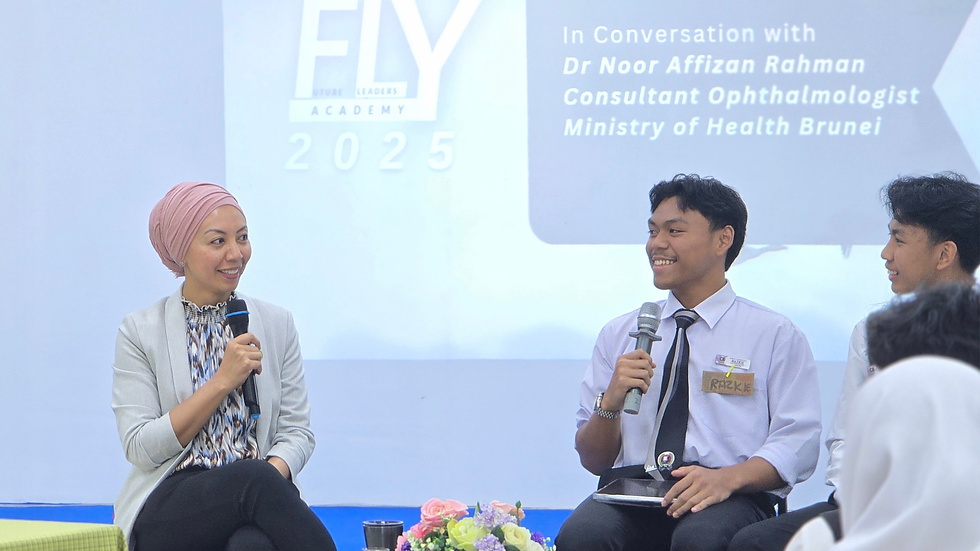
Another feature of our program is the distinguished guest interviews hosted on our FLY platform. Over the years, our guests have ranged from cabinet ministers to corporate CEOs, surgeons, lawyers, and community-minded entrepreneurs (including one generous founder who bought Gong Cha for the entire cohort during his session!).
We intentionally reserve the interviewer seat for our students. This incentivises them to step up, meet these leaders in their own offices, ask sharp questions, and build direct, professional connections that often bring them a step closer to their future employers.
What constantly surprises me is just how approachable and willing these seemingly "untouchable" leaders are when it comes to guiding the next generation. The reality is: most people are eager to give back, but few ever ask.
Time and again, students report these site visits and live interviews to be among the most impactful components of the entire program. They do something textbooks and AI-generated answers never can by providing context, allowing students to test, validate, and challenge whatever the algorithm feeds them.
*Without us ever making it mandatory, students naturally document these site visits through beautifully edited video reports—with production quality that often rivals professional media studios.
7. Pour Your Heart Into It
In my class on Leadership & People, I have students write a gratitude letter to someone who has made an impact on their lives—with a twist: they are asked to read the letter to the recipient later on. Over and over again, I come across submissions from students writing about their teachers. As I dig deeper, they don’t write about how proficient, interesting or even funny their teachers are. They write about the teachers who care, who believe in them, the teachers who stay back and patiently explain to them the concepts they don’t understand without making them feel diminished or stupid.

I often ask students about the teacher’s reaction when they read the gratitude letter to their teacher. Without any exception, they all tell me the teacher cried. And inevitably, the student cried too.
And then I would prod further, asking: 'Do you know why the teacher cried?' As expected, a long silence follows the question. I tell them it’s because nobody has ever told that teacher that their work truly mattered to them before. Day in and day out, they pour their heart out only to be met with crickets... It is no wonder they cry. I often joke that the poor teacher might have been on her way to hand in her resignation letter—and your letter stopped her!
After running my youth development programs all these years, I have realized one thing: It is easy to slip into autopilot from time to time. To forget why you started, and occasionally question yourself: Why am I even doing this? Especially when you walk out of a class of students who are indifferent, or receive reviews that are unjustified.

While I wish for every teacher to be met with the gratitude they deserve from their students, I advocate for teachers to do this for one another: to openly share each other’s challenges, to pick each other up when in doubt, to remind each other why we started, and to hold each other to a higher standard. Not simply because our students deserve it, but because the future of our society depends on the choices we make in the classroom—and how seriously we take our calling as educators.
Conclusion:
You may be thinking: All these innovations are easy for you to carry out— you control your own curriculum. But for the rest of us, we have a rigid syllabus to follow, KPIs to hit, and standardized exams to prepare students for.
I completely empathize with that reality.
But what if we viewed these ideas not as competing concepts, but as a complement to your existing curriculum?
When you build a more engaged classroom, foster an empathetic, grateful and safe environment, and cultivate a resilient mindset, you aren't sacrificing academic outcomes. You are laying the solid foundation that makes learning possible. And at the end of the day, isn't a motivated, confident student far better prepared to succeed—in their exams, and in life?


Comments